Theodoros Sotiriou
Cartes Postales from GreeceTheodoros Sotiriou is a veteran schoolmaster whose courteous manner and visible love of books sit alongside a past scandal that his community neither forgot nor resolved. Antigoni first knows him through her husband’s unexplained disapproval; meeting him herself, she finds a cheerful, cultivated man and later paints him with Eirini. The portrait becomes the episode’s quiet counterweight to gossip: Antigoni sees their evident affection without treating their history as a verdict.
Identity and Public Bearing
Theodoros has taught at the local secondary school for so many years that he was once Christos Vandis’s teacher. His long tenure makes him a familiar figure in the town’s daily life, and the school itself stands on the same street as Antigoni’s house. Passing it, she can see children playing in the yard; the school appears lively rather than unhappy. Theodoros, too, is part of this ordinary public landscape. He waves to Antigoni cheerfully when she sees him, and, when they meet at the school door, addresses her politely and asks when her husband is expected back.
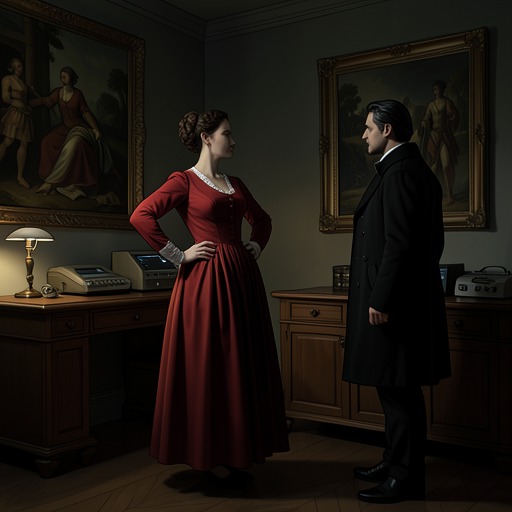
Antigoni estimates that Theodoros is well into his sixties, yet he remains sprightly. His appearance is carefully maintained: clipped moustache, neat grey hair, and a three-piece suit. A book is almost always in his hand, even when he cycles home. This image of the teacher is not simply formal respectability; it is paired with a genuine-seeming enthusiasm for reading. He tells Antigoni that he and Eirini have a good library and offers to lend her books, calling books the essence of life and stories a way to pass the time. His offer gives their acquaintance a practical beginning while presenting reading as companionship during her husband’s absence.
Criticism and the Unspoken Past
Theodoros enters Antigoni’s story under a cloud of criticism from her husband. Christos had dismissed him as lacking wisdom and as a poor example for children, despite the sayings of Plato displayed on his wall. Yet Christos never explained what he meant, and the couple did not return to the subject during the hurried weeks before his departure. The accusation therefore reaches Antigoni without its grounds. She has a judgment but no account to test it against, and the schoolmaster she observes does not readily match the condemnation.
A maid supplies a different, more concrete piece of history after Antigoni has visited Theodoros’s home. Two decades earlier, according to the maid, one of his former pupils moved in with him. The pupil was eighteen; Theodoros was already in his forties. They never married. Many people wanted him removed, but no replacement teacher was available, so the affair was overlooked, though not forgotten. The account explains the persistent scandal around him without establishing that it is the reason for Christos’s criticism. Nor does the evidence explicitly identify the former pupil as Eirini. It does, however, place the couple’s relationship within the story of a town that tolerated their shared life for practical reasons while retaining its disapproval in memory.
Eirini and the Portrait
After Antigoni has finished her portrait of the priest, the days begin to drag. She sends a maid with a note asking whether she may borrow books, and, at the appointed time the following week, goes to Theodoros’s home. Eirini opens the door. In her early forties, delicate and youthful in appearance, she has laughing eyes; Antigoni finds her beguiling. The three sit together over coffee, with Antigoni opposite the couple. After about an hour of conversation and choosing books, Antigoni asks whether they would sit for a portrait together. They accept immediately, and she arranges to return the next day to sketch them.
The sequence matters: Antigoni first meets the couple in the ordinary intimacy of hospitality and conversation, and only then proposes to paint them. She sees a handsome pair despite their obvious difference in age. Her finished picture captures not a public controversy but their cheerful disposition and the love they have for each other. The painting is a record of what she observes, rather than a declaration that the town’s history is false or that its judgments are justified.
Narrative Role and Significance
Antigoni’s response gives Theodoros’s episode its defining tension. Christos’s unexplained condemnation and the maid’s account establish the force of local judgment; Theodoros’s courteous welcome and his life with Eirini reveal another dimension, visible in their ease together. Antigoni does not pretend to adjudicate the scandal. For her, there is no judgment to be made in portraying their affection, and the completed work becomes her favourite painting so far. Theodoros thus helps mark a change in the painter’s attention: her work can preserve a relationship as she encounters it, without making the portrait an instrument of accusation. His character remains partly unresolved, but the story makes that incompleteness meaningful: public reputation, private attachment, and the reasons for another person’s disapproval do not automatically collapse into a single account.